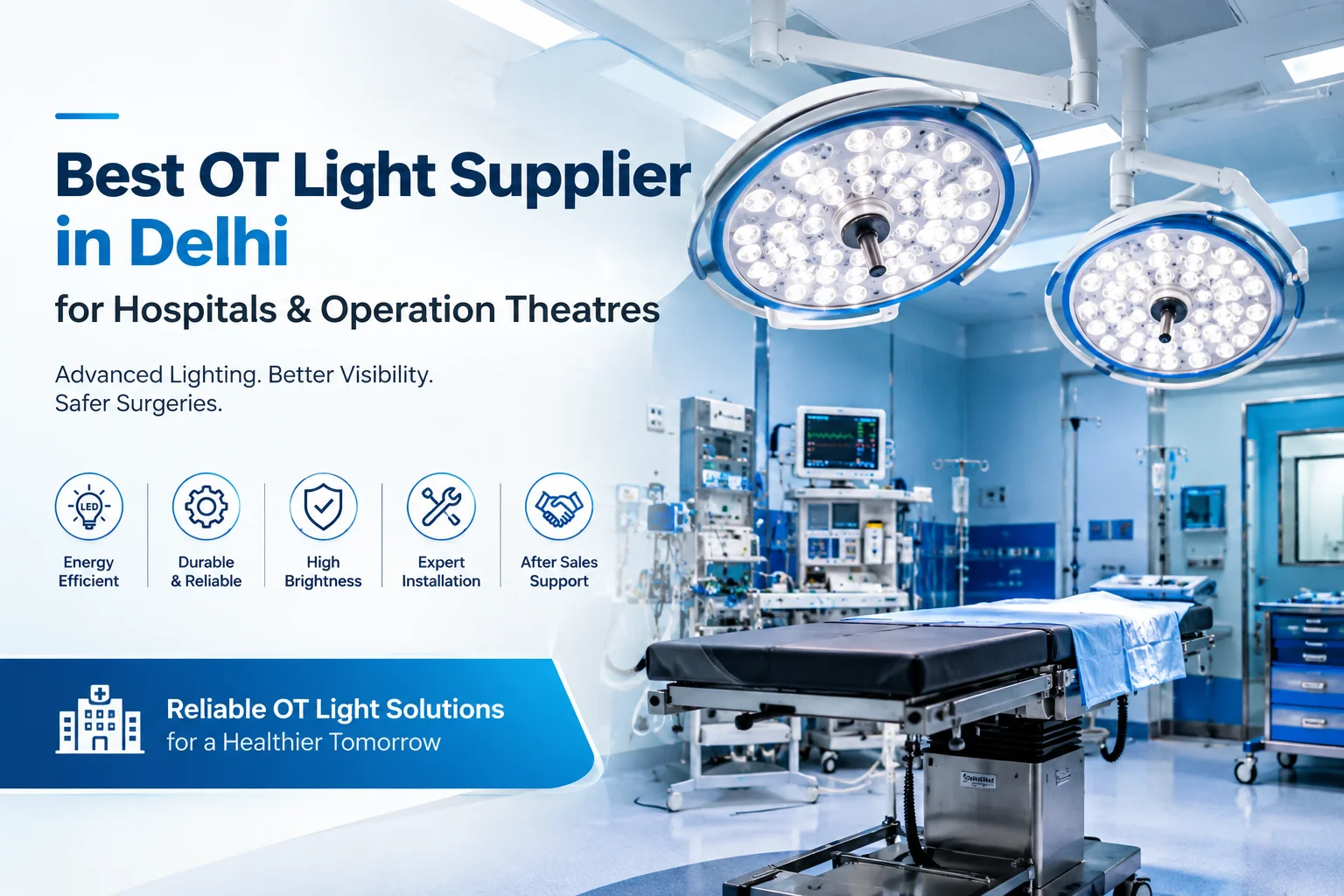
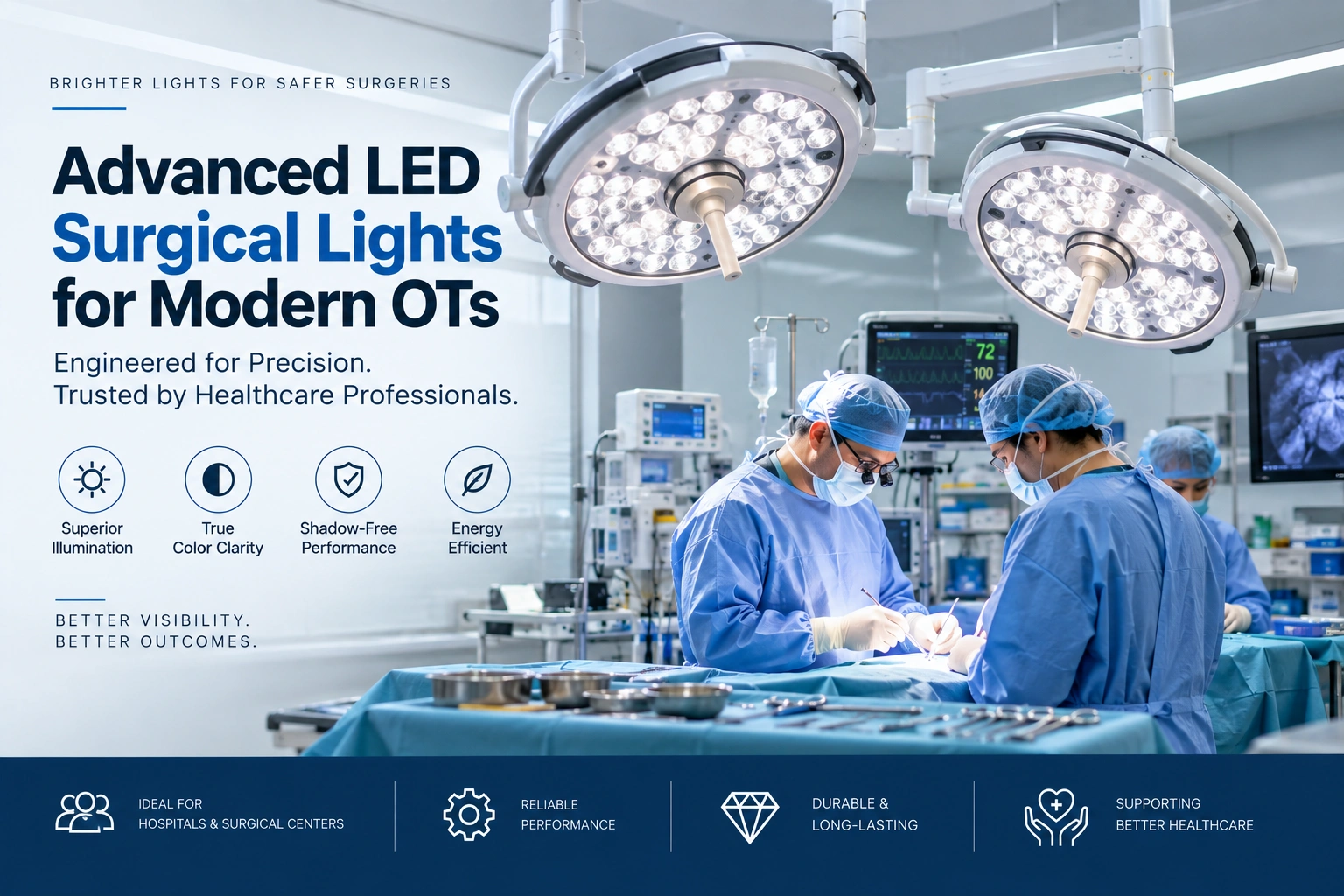
Modern operation theatres require reliable, high-performance lighting to support surgeons and medical teams during critical procedures. Surgical lighting is not simply about making an operating area brighter; it is about providing focused illumination, minimizing shadows, maintaining consistent color visibility, and supporting a comfortable working environment for long procedures. As hospitals, clinics, and specialty healthcare centers continue to upgrade their operating theatres, the demand for high-quality LED Surgical Light Manufacturers in Delhi is increasing.
LED surgical lights have become a preferred choice for many healthcare facilities because of their energy efficiency, long operating life, adjustable illumination, and advanced optical performance. However, selecting the right manufacturer and supplier is important to ensure that the lighting solution is suitable for the specific requirements of an operating theatre.
Importance of Quality Surgical Lighting
A properly designed surgical light helps medical professionals clearly observe the surgical field and surrounding tissues. Poor lighting can create shadows, glare, uneven illumination, or visual discomfort, which may affect working conditions.
Hospitals therefore need lighting systems designed specifically for medical environments. Unlike ordinary LED lighting, surgical lights are engineered to provide concentrated and controlled illumination for procedures.
When evaluating surgical light manufacturers in Delhi, hospitals should consider factors such as illumination performance, color rendering, shadow management, arm movement, light-head design, controls, maintenance requirements, and overall reliability.
Advantages of LED Surgical Lights
LED technology offers several benefits for hospital operating rooms. One of the major advantages is efficient energy use compared with conventional lighting technologies. This can contribute to lower power consumption, particularly in facilities where operating theatres are used extensively.
LED surgical systems can also provide long service life, reducing the frequency of lamp replacement. Modern systems may include multiple LED modules that work together to produce uniform illumination across the surgical field.
Another important feature is reduced heat generation. A well-designed LED surgical light can help provide a more comfortable environment for medical teams compared with older lighting technologies that produce considerable heat.
Features to Consider Before Buying
Hospitals should evaluate multiple technical and operational factors before purchasing surgical lighting.
Illumination Quality
The light should provide adequate and consistent brightness over the required surgical area. Uniformity is important for maintaining visibility throughout the procedure.
Color Rendering
Accurate color perception is essential in medical environments. High-quality surgical lighting should allow healthcare professionals to distinguish tissue and other details effectively.
Shadow Reduction
Surgical teams often work around the light path, making shadow control a major consideration. Multi-source LED systems can help reduce the impact of shadows created by medical staff.
Adjustable Positioning
The light should be easy to position and reposition. Flexible suspension arms and ergonomic handles can make it easier to direct illumination exactly where it is required.
Sterilization-Friendly Design
Surfaces and handles should be designed for easy cleaning and maintenance. Hospitals should review the manufacturer’s recommendations for disinfection and infection-control procedures.
Choosing LED OT Light Manufacturers and Suppliers
Hospitals looking for LED OT light manufacturers and suppliers in Delhi should evaluate product specifications together with after-sales support. The supplier’s ability to assist with installation, commissioning, troubleshooting, and maintenance can be particularly important for critical healthcare infrastructure.
A reliable supplier should also be able to understand the hospital’s operating theatre layout and recommend an appropriate configuration. Ceiling height, OT table position, existing electrical infrastructure, and room dimensions may influence the selection and installation process.
It is also useful to review technical documentation and product certifications applicable to the proposed equipment. Hospitals should confirm that the selected system aligns with their procurement and compliance requirements.
Choosing a Surgical Light Supplier for Hospitals
When searching for an LED surgical light supplier for hospitals in Delhi, healthcare organizations should avoid choosing products based solely on initial price. Surgical lights are long-term investments, and reliability, service availability, product support, and maintenance can have a significant effect on the total cost of ownership.
Hospitals should also consider spare-parts availability and service response time. In a medical environment, extended equipment downtime can disrupt planned procedures and increase operational pressure.
A supplier that provides proper installation guidance and ongoing technical support can be a valuable partner for healthcare facilities.
Applications of LED Surgical Lighting
LED surgical lights are commonly used in a variety of medical environments, including:
Operation Theatres: Primary surgical illumination for general and specialized procedures.
Minor Procedure Rooms: Compact systems can be suitable for outpatient and minor surgical environments.
Emergency Departments: Focused lighting can support procedures requiring immediate attention.
Specialty Clinics: Certain surgical and diagnostic procedures may require dedicated medical lighting.
Teaching Hospitals: Advanced lighting systems can support procedures performed in large and multi-specialty institutions.
The exact lighting configuration should always be selected according to the clinical application and room design.
Why Consider Hospi Light?
Hospi Light can be considered by hospitals, clinics, and healthcare institutions looking for specialized medical lighting solutions. When evaluating a surgical lighting supplier, buyers should discuss their OT requirements, preferred mounting arrangement, light specifications, and installation conditions.
The right supplier should provide clear information about illumination levels, optical technology, control features, movement range, maintenance, and service support. Hospi Light can be evaluated on these factors when comparing solutions for new OT installations or lighting upgrades.
For hospitals planning multiple operating rooms, working with an experienced supplier can also simplify standardization. Using compatible systems across different OTs may make staff familiarization, maintenance, and spare-parts planning easier.
Installation and Maintenance Considerations
Even a high-quality surgical light needs proper installation to perform effectively. Ceiling-mounted systems should be installed according to structural and electrical requirements, with sufficient clearance for movement and maintenance.
Routine cleaning and preventive maintenance should follow the manufacturer’s instructions. Hospital maintenance teams should regularly inspect movement mechanisms, controls, electrical connections, and other critical components.
It is also advisable to maintain documentation for service history, installation details, and warranty information. These records can simplify future troubleshooting and procurement decisions.
How to Compare Surgical Light Manufacturers
Hospitals comparing LED Surgical Light Manufacturers in Delhi should create a technical comparison based on identical requirements. Important criteria may include optical performance, number of LED modules, color temperature, color rendering, shadow control, positioning flexibility, mounting configuration, warranty, and service support.
A product demonstration can also be useful before finalizing a purchase. Seeing the light in operation can help hospital administrators and clinical teams evaluate brightness, color quality, positioning, and user controls.
Similarly, when reviewing surgical light manufacturers in Delhi, healthcare facilities should consider the supplier’s ability to provide installation and ongoing technical assistance rather than focusing only on the product brochure.
Conclusion
Selecting the right surgical lighting system is an important part of creating an efficient and reliable operation theatre. Modern LED technology can offer energy efficiency, long service life, focused illumination, and improved control when the system is properly designed and installed.
Hospitals researching LED OT light manufacturers and suppliers in Delhi should carefully compare technical specifications, installation requirements, certifications, warranty coverage, and after-sales service. A dependable LED surgical light supplier for hospitals in Delhi should also be capable of providing practical guidance based on the hospital’s room layout and clinical requirements.
Healthcare institutions can evaluate Hospi Light as part of their supplier selection process, particularly when looking for specialized medical lighting solutions and professional support. By choosing the right equipment and service partner, hospitals can create better-lit, well-organized, and dependable operating environments for medical teams and patients.